About this Blog

From Argentina, to Egypt, Ecuador, Europe, India, Japan, and even the Panama Canal, you'll hear about my exciting adventure stories, tips, personal experiences, and cultural information. You'll be able to read my stories about my Indian culture and the traditions and holidays my family experiences. I also provide a taste of the trips I have been on and some of the interesting people and opportunities I have had so far. I'll keep updating about all of my journeys. Also, take a look at the different pictures from all around the world as you go...

"Across the Seas with Suruchi".

For my specific stories and pictures, be sure to click the "My Travels" link below!!

Showing posts with label Holidays. Show all posts

Monday, October 3, 2011

IT'S NAVRATRI TIME!!!!! - Let's Garbaaaa!!

My ABSOLUTELY FAVORITE Indian festival was finally here this past weekend! 
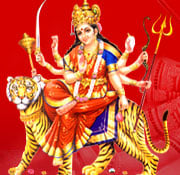
Navratri is a Hindu festival of worship of Shakti and dance & festivities. The word Navaratri literally means nine nights in Sanskrit, nava meaning nine and ratri meaning nights. During these nine nights and ten days, nine forms of Shakti/Devi are worshiped.  
Navratri festival in Gujarat is one of the main festivals. Garba is dance which people use to dance after the Durga Pooja with the groups and live orchestra or devotional songs.
Garba  is an Indian form of dance that originated in the Gujarat region. The name garba comes from the Sanskrit term Garbha ("womb") and Deep("a small earthenware lamp"). Many traditional garbas are performed around a central lit lamp or picture/statues of different avatars of Goddess Shakti. The circular and spiral figures of Garba have similarities to other spiritual dances, such as those of Sufi culture.

Modern garba is also heavily influenced by raas, a dance traditionally performed by men. The merger of these two dances has formed the high-energy dance that is seen today.
Both men and women usually wear colorful costumes while performing garba and dandiya. The girls and the women wear Chaniya choli, a three-piece dress with a choli, a chaniya, as the flared, skirt-like bottom, and dupatta, which is usually worn in the traditional Gujarati manner. Chaniya Cholis are decorated with beads, shells, mirrors, sitaras, and embroidery work, mati, Traditionally, women adorn themselves with jhumkas, necklaces, bindi, bajubandh, chudas and kangans, kamarbandh, payal, and mojiris. Boys and men wear kafni pyjamas with a kediyu - a short round kurta - above the knees and pagadi on the head with bandhini dupatta, kada, and mojiris.
There is a huge interest in Garba amongst the youth of the Indian and in particular Gujarati diaspora. Garba and Dandiya Raas are popular in the United States where more than 20 universities have Raas Garba competitions on a huge scale every year with professional choreography. 
Before the big night.
I enjoy Garba with a burning passion! I look forward to this day every year. This year, I brought along my friend Kaylyn. I was happy to see that she picked up the steps very quickly! I've won the Garba competition the past three years in a row! Although we got home at almost 2:30 am, it was totally worth it. Here are some highlights from the evening.
The Competition! :)

I can't wait till next year!

***Kaylyn took a close-up video of the competition as well. I'll post it as soon as I can!


Leia Mais…

Saturday, April 23, 2011

Earth Day

Call me a tree hugger, but yesterday was one of my favorite holidays, Earth Day! Earth Day is also coincidentally my father's birthday. Here are some facts that you probably did not know about Earth Day.

Earth Day From Above

To celebrate Earth Day, National Geographic photo editors selected 20 of the most stunning pictures of Earth, as seen from space, including this jewel-toned shot of the island country off the African coast.
Here is my favorite:Captured in 2000 by a NASA satellite, the scene shows where the salty waters of the Mozambique Channel mingle with freshwater outflow from the island's Betsiboka River. Bombetoka Bay is home to some of Madagascar's largest mangrove forests, which provide shelter for diverse mollusks and crustaceans as well as habitat for sea turtles, water birds, and dugongs.
Sapphire waters tinged with pink sediment seem to get tangled amid emerald vegetation in a satellite picture of Bombetoka Bay, on the northwestern coast of Madagascar.

What is Earth Day exactly?
Earth Day is a day that is intended to inspire awareness and appreciation for the Earth's natural environment.
How did Earth Day Begin?
From carycitizen.com
In November 1962, Senator Gaylord Nelson of Wisconsin wanted to bring environmental issues into the political agenda. The first task was to persuade President John Kennedy to give visibility to this issue by going on a national conservation tour. President Kennedy liked the idea and began a five-day, eleven-state conservation tour in September 1963.  This was the seed that ultimately flowered into Earth Day.
At that time in our history, environmental degradation was appearing everywhere.  Air pollution was thick, our parks and roadways where covered with litter and a little thing called “the greenhouse effect” was being discussed by scientists.
“Everyone noticed except the political establishment. The environmental issue simply was not to be found on the nation’s political agenda. The people were concerned, but the politicians were not,” recalled Senator Nelson in a 1993 article.
The idea occurred to the Senator – why not organize a huge grassroots protest over what was happening to the environment?  Nelson announced that in the spring of 1970 there would be a nationwide grassroots demonstration on behalf of the environment and invited everyone in the country to participate. The news of the demonstration spread rapidly across the nation.
“The response was electric. The American people finally had a forum to express its concern about what was happening to the land, rivers, lakes, and air – and they did so with spectacular exuberance,” recalled Senator Gaylord Nelson.
Why April 22?
Senator Nelson chose the date in order to maximize participation on college campuses for what he conceived as an "environmental teach-in". He determined the week of April 19–25 was the best bet as it did not fall during exams or spring breaks. Moreover, it did not conflict with religious holidays such as Easter or Passover, and was late enough in spring to have decent weather. More students were likely to be in class, and there would be less competition with other mid-week events—so he chose Wednesday, April 22.
International Mother Earth Day
International Mother Earth Day was established in 2009 by the General Assembly under Resolution A/RES/63/278. The Resolution was introduced by The Plurinational State of Bolivia and endorsed by over 50 member states. It recognizes that "the Earth and its ecosystems are our home" and that "it is necessary to promote harmony with nature and the Earth." The term Mother Earth is used because it "reflects the interdependence that exists among human beings, other living species and the planet we all inhabit."
Earth Day Ecology Flag
Created by Ron Cobb, the Ecology Flag was a cultural symbol used in the 1970s by American environmentalists.  The symbol was formed by taking the letters "e" and "o", taken from the words "environment" and "organism", and putting them in superposition, thereby forming a shape reminiscent of the Greek letter Θ (Theta).
Earth Day Anthem (sung to Beethoven's "Ode to Joy"
Joyful joyful we adore our Earth in all its wonderment

Simple gifts of nature that all join into a paradise
Now we must resolve to protect her
Show her our love through out all time
With our gentle hand and touch
We make our home a newborn world
Now we must resolve to protect her
Show her our love through out all time
With our gentle hand and touch
We make our home a newborn world

Leia Mais…

Monday, March 28, 2011

Some Pictures from Holi in India

From: dogonews.com


Looks like a fun time right? Sure is!

Leia Mais…

Friday, March 25, 2011

Happy Greek Independence Day!


     This holiday commemorates the start of the War of Greek Independence in 1821. It coincides with the Greek Orthodox Church’s celebration of the Annunciation to the Theotokos, when the Archangel Gabriel appeared to Mary and told her that she would bear the son of God. The Greek struggle had elicited strong sympathy in Europe, and many leading intellectuals had promoted the Greek cause, including the English poet Lord Byron. At the naval Battle of Navarino, the combined British, French, and Russian forces destroyed an Ottoman-Egyptian fleet. The revolution ended in 1829 when the Treaty of Edirne established an independent Greek state.
     The churches celebrate the Festival of the Annunciation with pomp, ceremony, and joy. The spectacle is especially vivid on the islands of Tinos and Idra (Hydra). Hydra, a maritime merchant power with a swift, well-maintained fleet, was a determined and effective supporter of the War for Independence, doubling the celebration there. You can also expect colorful religious ceremonies wherever the local monastery or church is named "Evangelisimos" or "Evangelistria", such as Panagia Evangelistria on Tinos.
     Greek Independence Day is also celebrated by many of the Greeks of the diaspora, and large parades are becoming more common in United States cities where Greeks have made their homes, including Boston and New York City. Each year, the U.S. President marks Greek Independence Day with a proclamation reminding citizens of the contributions of Greece to democracy, and of the ongoing contributions of expatriate Greeks in their new communities throughout the world.

Leia Mais…

Saturday, March 19, 2011

The Harmonium

So, since it's Holi, I've decided to go on an Indian cultural spree!
Tomorrow, the devotional music class my mother teaches will be performing at the annual Holi program at my temple. The group will be singing an Indian prayer, followed by a song that celebrates the Holi festival. I will be helping them out be playing the harmonium, a Indian instrument. The harmonium is like a one-handed piano - accordion. Sound is produced by air, supplied by hand-operated bellows, being blown through sets of free reeds. 
Though derived from the designs developed in France, the harmonium was developed further in India in unique ways, such as the addition of drone stops and a scale changing mechanism. South Asian music is based on melody, rather than harmony, which makes two-handed playing unnecessary, and South Asian musicians are used to sitting cross-legged on the ground or kneeling to play, rather than on a chair or bench.
This is how it is played and what it sounds like:


Here's a cool video of  T.I., an American recording artist, and film and music producer learning about some Indian instruments, including the harmonium!

Leia Mais…

Happy Holi!

What's in the Indian kitchen today?
"Holi na Ladva!"
My mom has been working on these all day.
This deliciously unhealthy Indian sweet is a tradition to make on Holi day.
Here is the SIMPLIFIED recipe:


 Churma Ladoo Recipe:


Ingredients:
200 gms wheat flour
150 gms sugar
150 gms clarified butter


Preparation:
Mix fat to flour and make a dough as for chapatis. Make even round balls and flatten it to about 2 inches diameter.Heat butter. Fry the balls on a slow fire till it turns golden brown.
Make a fine powder of these balls and sieve.
Heat the butter and fry the powder till it turns light brown.
Remove from fire and allow it to cool.
When the mixture is warm, add ground sugar and mix well and form into ladoos.

Happy eating!

The first day of Spring is tomorrow! Enjoy the sunshine. :)

Leia Mais…

Thursday, March 10, 2011

Holi - The Festival of Colors and Spring


"HOLI HAI!" - It is holi! On Holi day the streets in India will reverberate with the chants of Holi hai...

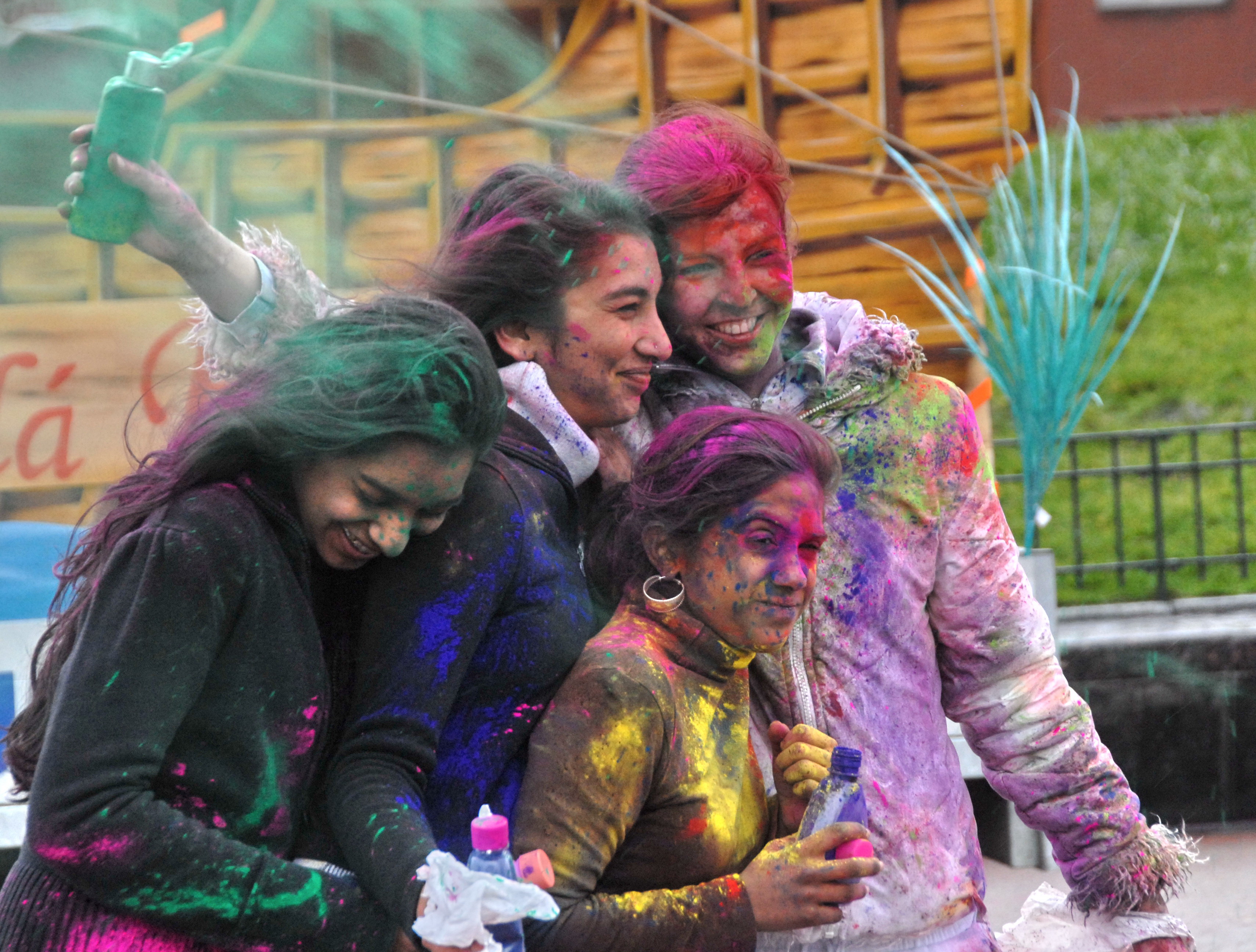
It's holiday time in my family again. The colorful festival of Holi is celebrated on Phalgun Purnima which comes in February end or early March. This year the festival is on Sunday, March 20. The Holi festival has an ancient origin and celebrates the triumph of 'good' over 'bad'. The colorful festival bridges the social gap and renew sweet relationships.

The Atmosphere:

Colours will fill the atmosphere as people throw colorful powders in the air showing great joy and mirth in the arrival of this Spring Festival.
Holi marks the end of the winter gloom and rejoices in the bloom of the spring time. It is the best time and season to celebrate.
Days before Holi, the markets get flooded with the colours of every hues. This aptly sets the mood of the people till the actual day of Holi. It is such a colourful and joyous sight to watch huge piles of bright red, magenta, pink, green and blue every where on the streets.
These days it is easy to buy colours from the market but still some people do take up the task of making colours at home, usually from flowers. These home made colours, have a special fragrance of love in them.


History:

The exact origin of the festival can not be found, though several historians claim that the Holi celebration in the country was brought along with the Aryans. Long ago, Holi was a special rite performed by married women for the happiness, well-being and prosperity of their families and the full moon (Raka) was worshiped for bringing auspiciousness and pleasure.


What does this festival celebrate?

In some parts of India, specially in Bengal and Orissa, Holi Purnima is also celebrated as the birthday of Shri Chaitanya Mahaprabhu (A.D. 1486-1533). However, the literal meaning of the word 'Holi' is 'burning'. There are various legends to explain the meaning of this word, most prominent of all is the legend associated with demon king Hiranyakashyap. 
 
Legend of Lord Krishna is also associated with play with colors as the Lord started the tradition of play with colours by applying colour on his beloved Radha and other gopis. Gradually, the play gained popularity with the people and became a tradition.
There are also a few other legends associated with the festival - like the legend of Shiva and Kaamadeva and those of OgressDhundhi and Pootana. All depict triumph of good over evil - lending a philosophy to the festival.

How is Holi celebrated?
 
The main day of Holi is called Dhuleti. This is the day that the actual play of colors take place. There is no tradition of holding a puja (a common Hindu ritual) and is meant for pure enjoyment. It is common to wear white on Dhuleti. The tradition of playing colors is particularly rampant in India. It may be one of the most excited festivals one can witness. Holi is celebrated with lot of enthusiasm and fun.
People take extreme delight in spraying colour water on each other with pichkaris (water guns) or pouring buckets and buckets of it. Singing Bollywood Holi numbers and dancing on the beat of dholak (drum) is also a part of the tradition.
My temple in Harrisburg will be having a small colors celebration on March 20.


Leia Mais…

Wednesday, November 3, 2010

Happy New Year!

Okay, so you're probably thinking "Happy New Year? In November?"

It is true! Well, in India it is.
It's Diwali time, or as you may know it, New Year's day, or week. Diwali is India's festival of lights and most important festival of the year. Diwali starts today and Indian families all over the world will be celebrating for the next five days. Here's the rundown of each day:

Day 1: Dhanteras
A diya, or candle, is lit to celebrate the
Fesitval of Lights.
The first day of festival begins with Dhanteras, Dhan means "wealth" and Trayodashi means "13th day". Dhanteras falls on the 13th day of the second half of the lunar month. On this day, homes are thoroughly cleaned, people exchange gifts, and purchase new items for the house. This year you can surprise your close ones by sending them Dhanteras gifts. People pray for prosperity on Dhanteras to Lakshmi, because it is believed to give the best results for the year ahead.

 Day 2: Narak Chaturdasi
The second day of Diwali is called Narak Chaturdasi. Narak means "of new era of Light and Knowledge". Chaturdasi implies the 14th day. Narak Chaturdasi is the 14th day of the dark forth night of the month of Ashwin. On this day Lord Krishna destroyed the demon Narakasur and made the world free from fear.

Day 3: Laxmi Puja on Diwali
An Indian women creates a rangoli masterpiece using
powders of different vibrant colors.
The third day is the main day of  celebrations of the festival of Diwali. "Diyas", or candles, are lit and shine brightly in every home. Lakshmi Puja on Diwali is performed on the day as Laskshmi is the goddess of wealth and Ganesha is the Lord of Happiness. Lakshmi Puja is performed for prosperity, material abundance, and spiritual prosperity. The Puja is performed in the evening. On the third day fireworks are let off everywhere. The diyas and fireworks give Diwali the name of "Festival of the Lights". People also decorate their homes with "rangoli", which is Hindu folk art.

Day 4: Goverdhan Puja/New Year:
The fourth day of Diwali is called Goverdhan Puja, also known as Annakut. In ancient times, the people of Gokul would celebrate a festival in honor of Lord Indra, worshiping him at the end of each monsoon season. However, in one particular year, the young Krishna halted the custom of offering prayers to Indra, who in a fit of anger poured down a deluge in order to destroy Gokul. Krishna saved Gokul by lifting up the mountain called Govardhan and holding it over the people as an umbrella. So, on this day, Goverdhan Puja is performed to commemorate this act of Sri Krishna.


Lord Krishna lifts Govardhan with his finger to
protect the Gokul from the storm
Day 5: Bhai Dooj:
The fifth day of Diwali is Bhai Dooj; it is the second day of the bright fortnight of Kartika. In the Vedic era, Yamraj, the Lord of Death visited his sister Yamuna, who marked the auspicious Tilak on his forehead. They are and talked together, enjoying each other's company, exchanging special gifts as a token of their love for each other. Since that time the custom has been for brothers to visit their sisters to celebrate Bhai Dooj.

More on Hindu Religion during Diwali:
Lord Ganesha

Goddess Lakshmi
The rituals vary according to region. However, special blessings are given to Lakshmi, the Goddess of wealth and prosperity, and Ganesha, the remover of obstacles. The Goddess Lakshmi is believed to have been created from the churning of the ocean on the main Diwali day, and that she'll visit every home during the Diwali period, bring with her prosperity and good fortune. It's said that she visits the cleanest houses first, therefore people make sure their houses are spotless before lighting diyas invite her in. Small statues of the Goddess are also worshiped in people's homes.


Happy Diwali Everyone! I hope you have a wonderful new year!
:)

Leia Mais…