About this Blog

From Argentina, to Egypt, Ecuador, Europe, India, Japan, and even the Panama Canal, you'll hear about my exciting adventure stories, tips, personal experiences, and cultural information. You'll be able to read my stories about my Indian culture and the traditions and holidays my family experiences. I also provide a taste of the trips I have been on and some of the interesting people and opportunities I have had so far. I'll keep updating about all of my journeys. Also, take a look at the different pictures from all around the world as you go...

"Across the Seas with Suruchi".

For my specific stories and pictures, be sure to click the "My Travels" link below!!

Showing posts with label World. Show all posts

Monday, October 3, 2011

IT'S NAVRATRI TIME!!!!! - Let's Garbaaaa!!

My ABSOLUTELY FAVORITE Indian festival was finally here this past weekend! 
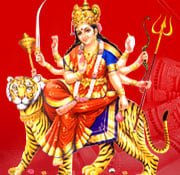
Navratri is a Hindu festival of worship of Shakti and dance & festivities. The word Navaratri literally means nine nights in Sanskrit, nava meaning nine and ratri meaning nights. During these nine nights and ten days, nine forms of Shakti/Devi are worshiped.  
Navratri festival in Gujarat is one of the main festivals. Garba is dance which people use to dance after the Durga Pooja with the groups and live orchestra or devotional songs.
Garba  is an Indian form of dance that originated in the Gujarat region. The name garba comes from the Sanskrit term Garbha ("womb") and Deep("a small earthenware lamp"). Many traditional garbas are performed around a central lit lamp or picture/statues of different avatars of Goddess Shakti. The circular and spiral figures of Garba have similarities to other spiritual dances, such as those of Sufi culture.

Modern garba is also heavily influenced by raas, a dance traditionally performed by men. The merger of these two dances has formed the high-energy dance that is seen today.
Both men and women usually wear colorful costumes while performing garba and dandiya. The girls and the women wear Chaniya choli, a three-piece dress with a choli, a chaniya, as the flared, skirt-like bottom, and dupatta, which is usually worn in the traditional Gujarati manner. Chaniya Cholis are decorated with beads, shells, mirrors, sitaras, and embroidery work, mati, Traditionally, women adorn themselves with jhumkas, necklaces, bindi, bajubandh, chudas and kangans, kamarbandh, payal, and mojiris. Boys and men wear kafni pyjamas with a kediyu - a short round kurta - above the knees and pagadi on the head with bandhini dupatta, kada, and mojiris.
There is a huge interest in Garba amongst the youth of the Indian and in particular Gujarati diaspora. Garba and Dandiya Raas are popular in the United States where more than 20 universities have Raas Garba competitions on a huge scale every year with professional choreography. 
Before the big night.
I enjoy Garba with a burning passion! I look forward to this day every year. This year, I brought along my friend Kaylyn. I was happy to see that she picked up the steps very quickly! I've won the Garba competition the past three years in a row! Although we got home at almost 2:30 am, it was totally worth it. Here are some highlights from the evening.
The Competition! :)

I can't wait till next year!

***Kaylyn took a close-up video of the competition as well. I'll post it as soon as I can!


Leia Mais…

Monday, April 4, 2011

My Thoughts Go Out to Japan

My trip to Japan has actually been my favorite vacation that I've had so far. The people are wonderful and the scenery is absolutely gorgeous. It is unfortunate that this country, that become a peace national, has to experience such a terrible natural disaster. My thoughts go out to the families that have lost loved ones or cannot find them. Japan definitely did not deserve this disaster, but I'm sure that it will be up and running soon, just as it did during WWII. The nation is hardworking, dedicated, and intelligent. I have confidence in them.

Leia Mais…

Friday, March 11, 2011

Check out the playlist!

I added some new songs from India, Afghanistan, Ethiopia, and more!

Leia Mais…

Thursday, March 3, 2011

The Atomium - Belgium

Located in Brussels, the Atomium is a monument designed by André Waterkeyn in 1958. Originally, it was build for Brussels World’s Fair Expo '58. Waterkeyn felt that an atomic structure would be more symbolic of the era. It stands 102-metres (335 ft) tall and has nine steel spheres connected so that the whole forms the shape of a unit cell of an iron crystal magnified 165 billion times. Tubes connect the spheres along the 12 edges of the cube and all eight vertices to the centre. I visited the Atomium in the summer of 2006.

Leia Mais…

Tuesday, March 1, 2011

Reduce Aging Effects - Learn a New Language!

Recent discoveries say that speaking at least two languages may slow dementia in the aging brain.
It has already been discovered  by scientists that learning multiple languages help young adults and children perform better on tasks dictated by the brain's executive control system, but new studies show that these advantages continue into old age.

"Bialystok and colleagues examined 102 longtime bilingual and 109 monolingual Alzheimer's patients who had the same level of mental acuity. About 24 million people have dementia worldwide, with the majority of them suffering from Alzheimer's, according to Sweden's Karolinska Institutet medical university."

 So, if I were you, I'd pick up a Rosetta Stone CD and start getting to work! It's never too late to learn a new language! Granted, people born into bilingualism have it a bit easier. I know how to speak English and Gujarati fluently, but I can also speak some Hindi and Spanish.

Being "bilingual is one way to keep your brain active—it's part of the cognitive-reserve approach to brain fitness," Bialystok said.


More at: news.nationalgeographic.com

Leia Mais…

Monday, February 21, 2011

The Big Money

Do you want to go all out in luxury?
 Here are the world's most expensive hotel rooms:

10.  The Penthouse Suite, The Martinez Hotel, Cannes
Nightly Rate: $18,000
Both of the two suites have a jacuzzi, plasma screen televisions, DVD library, kitchen, open bar, private butler on call 24/7, and an option to join both suites into one big apartment. The luxury has no limit here – the design is kept in the Art Deco style, with streamlined furniture, silk curtains and teak parquet floors.

9. Ritz-Carlton Suite, Ritz-Carlton Moscow
Nightly Rate: $18.200
The floor-to-ceiling windows in the Ritz-Carlton Suite will give you the most beautiful views of the Kremlin, Red Square, St. Basil’s Cathedral, and Christ the Savior Cathedral. The furnishings are in a Classic Russian Imperial style. The 2,500 square-foot suite comes with a spacious living room, dining area, library, office room and boardroom, grand piano, and heated floor.
8. Royal Suite, Burj Al Arab, Dubai
Nightly Rate: $19.000

The two-story, 8,400-square-foot suite features views over the Arabian sea, marble flooring, a rotating four-poster bed in the master bedroom, dining area, and a private cinema and elevator between the split-level rooms. Guests are met by a chauffeur driven Rolls-Royce Silver Seraph (or, for a bit extra, by a helicopter). A personal butler stands 24/7 at the ready to fulfill every wish. The Royal Suite is the last word in luxury with a marble and gold staircase, leopard print tufted carpets and Versace linens.

7. Imperial Suite, Park Hyatt, Vendôme, Paris
Nightly Rate: $20.000
This pricey suite is located on the 5th floor and takes 200-sq.-meters. A 60-sq.-meter balcony is overlooking the Rue de la Paix, with an outstanding view of the Vendôme column. The Imperial Suite has high ceilings, a dining room, kitchenette, bar, and a mansard roof. It also includes in-suite spa with whirlpool bath, steam room shower and a built-in massage table. Also included are high-speed Internet access and a computer with flat screen monitor, multi-line telephones, and a separate work area to help you enjoy the work process.

6. The Bridge Suite, The Atlantis, Bahamas
Nightly Rate: $22,000
The Bridge Suite is located on top of a bridge that connects the two Royal Towers buildings, so it overlooks the entire resort and marina. An 800 square foot balcony and 12-foot high ceilings throughout with full length windows allow you to enjoy a 360 view of the water, lagoons and pools in Paradise Island. The suite has 10 rooms that are decorated in black, red and gold (including a 22-karat gold chandelier in the dining room). The living room is a 1,250-square-foot room with grand piano and twin entertainment centers. The master bedroom has a sitting area, his-and-hers closets so large that you can park your car there, and hand-painted linens. The kitchen also has its own entrance, so a permanent staff of seven, including a butler and a cook can access the rooms without bothering you.


5. Presidential Suite, Ritz-Carlton, Tokyo

Nightly Rate: $25.000
The suite is located on the 53rd floor above Tokyo with spectacular views that include the Imperial Palace outer gardens and Roppongi Hills. In the suite’s 3300 sq ft you get pure luxury with a stunning four poster bed in the master bedroom, personal concierge, connected living room/dining room, an oversized marble bathroom with Sony BRAVIA 20 inch flat screen television, and access to indoor pool and fitness studio.

4. Villa La Capula Suite, Westin Excelsior, Rome

Nightly Rate: $29.000
The suite covers 6,099 square feet and has an additional 1,808 square feet of balconies and terraces. While it only has two bedrooms, five more can be joined to it. You will have all things Roman and excessive – a cupola, a Pompeii-style Jacuzzi pool, frescoes (the painted horizons on the frescoes were designed to match perfectly with the real Roman one), stained glass windows, and almost 2,000 feet of balcony space including a sun deck overlooking the Via Veneto district. The downstairs also has a private kitchen, and the dining room features an antique Murano glass chandelier, a private wine cabinet with over 150 wines to choose from and a study/library covered in hand-carved wood. And what really makes this suite over the top is a private cinema with Dolby surround sound.


3. Ty Warner Penthouse, Four Seasons Hotel, New York

Nightly Rate: $34.000

The $50 million Ty Warner Penthouse at the Four Seasons in NY was designed by legendary architect I.M. Pei, Peter Marino and hotel owner Ty Warner. The nine-room suite has walls inlaid with mother of pearl, gold and platinum-woven fabrics. The suite is located on the 52nd floor of New York’s tallest hotel with floor-to-ceiling bay windows offering a breathtaking 360 degree view of the City. If that is not relaxing enough you can enjoy a waterfall in the Zen Room, play the grand piano in the library or soak in a tub overlooking Central Park. Full spa treatments, a personal trainer and a 24/7 butler are all included, and if you still find a will to leave, you can choose to be chauffeured in a Rolls Royce or Maybach, and you’re always guaranteed a table at the hotel’s renowned L’Atelier de Joël Robuchon restaurant.

2. Hugh Hefner Sky Villa, Palms Casino Resort, Las Vegas
Nightly Rate: $40.000
The suite cost roughly $10 million to build but the high-rollers can rent it for a small $40,000 a night. The two-story 9,000 square foot Villa includes a glass elevator, a rotating bed set beneath a mirrored ceiling, and a glass wall Jacuzzi that extends out over the hotel and offers amazing around-the-clock butler service, massage and spa rooms, work-out room and poker table, fireplace, three bedrooms, and pop-up plasma TVs.

And finally....

1. Royal Penthouse Suite, President Wilson Hotel, Geneva


Nightly Rate: $53.000

The Imperial Suite, which is actually an entire top floor of the hotel, is reached via a private elevator and has four bedrooms, six bathrooms with mosaic marble floor, a cocktail lounge and a terrace with a dramatic view through the bulletproof windows over the city, Lake Geneva and Mont Blanc — all of which overlook Lake Geneva. The suite is decorated in a contemporary style, with marble and hardwood floors. The living room has a billiards table, a library and a cocktail lounge with a view of the water fountain, and can accommodate 40 people. The dining room seats 26 people around an oval mahogany table. The hotel’s staff reassures guests that the security in the Imperial Suite is among the best in the world, ideal for celebrities or traveling heads of state who visit the United Nations headquarters next door at the Palais Wilson.


From: http://www.dirjournal.com/info/10-most-expensive-hotel-rooms-in-the-world/

Leia Mais…

Wednesday, December 22, 2010

Adventure of the Year


   Jessica Watson is an Australian sailor. She resides in Buderim, Queensland. In May 2010, she unofficially became the youngest person to sail non-stop and unassisted around the world! Watson departed from Sydney on 18 October 2009, heading eastbound over the Pacific Ocean, Atlantic Ocean and the Indian Ocean. She returned to Sydney on 15 May 2010, three days before her 17th birthday.
See http://www.jessicawatson.com.au/ for more information.

Leia Mais…

Friday, December 17, 2010

Lonely Planet’s top 10 cities for 2011

Who doesn’t love a city? Lonely Planet has scoured the globe for next year’s hottest cities. The top picks show that a city doesn’t need to be a heaving metropolis to get on the list. Then again, sometimes it helps. One of our favourites is the world’s largest city that cannot be reached by road. And there are even a couple of European cities that remain criminally underrated. Here they are, Lonely Planet’s top 10 cities for next year, ranked in order:

1. New York

Since 9/11, the site of the World Trade Center’s twin towers has stood out as a closed-off, out-of-view, painful gaping void. This year that changes, as the former WTC site finally reopens to the public with the National September 11 Memorial, a 6-acre, tree-filled plaza with 30ft-deep waterfalls at the footprint of the former towers, rimmed by the name of each victim and illuminated at night (its museum will follow in 2012). For the city, this will be more momentous than if the Yankees, Knicks, Rangers and Giants won simultaneous championships while the ball dropped in Times Square on New Year’s Eve. For all of New York, 11 September 2011 will be a defining moment.

2. Tangier

From its extraordinary position perched on the northwestern-most tip of Africa, Tangier looks in two directions: one face towards Spain and Europe, and the other into Africa. The ‘white city’ announces a culture excitingly different from that of its close cousins across the water. With the recent arrival of a new city governor, the town beach now sparkles, the hustlers are off the streets and even the taxi drivers are polite. A stylish new Tangier is being created with a dynamic arts community, renovated buildings, great shopping and chic new restaurants.

3. Tel Aviv

Tel Aviv is the total flipside of Jerusalem, a modern Sin City on the sea rather than an ancient Holy City on a hill. Hedonism is the one religion that unites its inhabitants. There are more bars than synagogues, God is a DJ and everyone’s body is a temple. Yet, scratch underneath the surface and Tel Aviv, or TLV, reveals itself as a truly diverse 21st-century Mediterranean hub. By far the most international city in Israel, Tel Aviv is also home to a large gay community, a kind of San Francisco in the Middle East. Thanks to its university and museums, it is also the greenhouse for Israel’s growing art, film and music scenes.

4. Wellington

Wellington is Cool-with-a-capital-C, crammed with more bars, cafes and restaurants per capita than New York, and a slew of gourmet producers including some 10 independent coffee roasteries. Year-round you’ll find arts and cultural events in abundance. Likewise, its film industry, ‘Wellywood’, centred on the Miramar Peninsula, is booming thanks in large part to the success of Wellingtonian Sir Peter Jackson (executive producer of the 2011 and 2012 Hobbit movies currently being made here). This little capital will be front-and-centre on the world stage in 2011 when New Zealand hosts the Rugby World Cup.

5. Valencia

Valencia sits coquettishly and again confidently along Spain’s Mediterranean coast. For centuries, it was overshadowed by larger Spanish cities – hard-nosed, commercially-minded Barcelona and Madrid, the nation’s capital. Not any more. While retaining its provincial charm, Spain’s third city now mixes with the international crowd. Host of a couple of America’s Cup yachting jamborees and an annual street circuit Formula 1 motor race, it’s also European Capital of Sport for 2011 and a favourite destination for conferences and congresses. Valencia enjoyed its golden age two full centuries before the rest of Spain.

6. Iquitos

After days forging by boat along rainforest-fringed rivers, Iquitos, mighty megalopolis of the Peruvian Amazon, comes as a shock to the system. Pulsating with life, the city’s latest boom is tourism: visitors may flock to reconnoitre the rainforest but taking time to imbibe Iquitos itself is imperative too. This is a sultry slice of Amazon life: Brazilian, Colombian, indigenous and expat. Clubs bounce to salsa and rock until the early hours with the vigour you’d expect of Peru’s jungle capital, but Iquitos is also a cultural hub: expect works by Peru’s top artists, opulent rubber-boom mansions and a museum on Amazon ethnography for starters. As a trading post for rainforest tribes, market mayhem and riverboat bustle are part of the package, all conspiring to fill the city with an addictive, round-the-clock energy.

7. Ghent

Here’s a secret within a secret: Ghent might just be the best European city you’ve never thought of visiting, in a country that continues to be criminally overlooked. Ghent hides away in the middle of Belgium’s big three – Brussels, Bruges and Antwerp. Most Belgium-bound visitors rushing between these see nothing more than the stately fortifications of Ghent’s St Pieter’s Station. Those who do hop off the train and stroll along the Leie River to the historic centre will have their eyes out on stalks. Here hides one of Europe’s finest panoramas of water, spires and centuries-old grand houses. But this is no place to simply kick back: Ghent has one of Europe’s most dynamic festival scenes, which vies for visitors’ attention. This year the entire centre will emerge from a major program of rebuilding designed to show off the huge pedestrianised squares.

8. Delhi

The great metropolis of Delhi, encompassing Old and New Delhi and sprawling out for miles, has not looked this smart and sparkling in centuries. Huge preparations for the Commonwealth Games, which took place in October 2010, improved the city’s infrastructure, cleaned up its streets and added to its accommodation options. Aside from, of course, a bounty of new or improved sporting facilities, there’s the marvellous artery of the Metro – an underground transport system that’s a futuristic, egalitarian world away from the sometimes chaotic, class-ridden situation above ground. This year marks 100 years since New Delhi was founded in 1911. At least eight cities are known to have been founded on this spot. The commemoration of this anniversary is sure to be a colourful and lively affair.

9. Newcastle

Is it Australia’s most underrated city? Anyone surprised to see Newcastle on the list of 2011′s hottest cities (and there’s a few of you, right?) probably hasn’t pulled in off the Pacific Highway, or at least not for a while. Newcastle flies under the radar of Aussies and international travellers in part because it’s overshadowed by its bigger, bolder and better-known sibling, Sydney, 150km south. But, at around one-tenth the size, Australia’s second-oldest city has Sydney-like assets: surf beaches, a sun-drenched subtropical climate, and diverse dining, nightlife and arts. Not only is Newcastle ideally located just two hours by road or rail or 30 minutes by plane or seaplane from Sydney, it’s less than an hour’s drive west to the Hunter Valley wineries, south to sailboat-filled Lake Macquarie, north to whale-watching and sharkfeeding at Port Stephens and to sandboarding at Stockton Beach (the southern end of the 32km-long beach is a five-minute ferry ride across Newcastle’s harbour).

10. Chiang Mai

If Chiang Mai were a person, it would be Bob Dylan. With a history dating back further than anyone can remember, its influence remains enormous. And despite its great age, there’s still a bohemian chic that makes it as relevant and hip as ever. Culture capital of Thailand, Chiang Mai was once the heart of the Lanna kingdom. Today those wanting to flee the bustle of Bangkok visit to lounge in coffee shops and drink in the city’s artisanal atmosphere. With a friendly, cosmopolitan feel, this is one easy, safe and pleasant place to explore. There are dozens of well-preserved temples here, too. Many new ecotours and adventure trips are appearing, and with a choice of river rafting, elephant rides, trekking and off-road cycling, even the biggest adrenaline junkie will be sated.

Leia Mais…

Wednesday, December 8, 2010

Social Standards


Many countries have important social standards, that are not laws, but have been enforced through society and tradition. If you travel to a country without knowing these standards, you may disrespect someone or experience a critical misunderstanding.
Here's a look at the social standards and misunderstandings that may occur in different countries.
  • In Canada, lining up, or queuing: People normally line up or queue according to the principle of  "first-come, first-served." They will be angry if you push ahead in a line-up instead of  waiting your turn.  
  • We Americans, and our British counterparts, consider eye contact to be a good communication skill. When we want to show respect for another, we will look that person straight in the eye. In Asian countries, it is considered rude to make eye contact.
  • Being prompt is a positive trait in our country. In Argentina, and most of South America, arriving at a social event on time is thought to be rude. In contrast, in Denmark being late is completely unacceptable behavior.
  • Arab countries consider shaking with the left hand an insult. At casual gatherings in the United States, individuals are comfortable to put their feet on the coffee table. To do so in an Arab country would be viewed as rude, for displaying the soles of feet is unacceptable.
  • Thumbs up is an almost universal gesture for conveying a job well done, or approval of performance. The thumbs up gesture is an insult in the country of Iraq.
  • Chinese custom is to serve the oldest person first out of respect. If age is not discernible, then the guest is served first. It is rude in China to pour your own drink. You must pour the drink of your companion, and he in turn will pour your drink.
  • Beckoning someone to come to you with a curled finger is inviting in our country. In most Asian countries this same finger gesture is rude behavior.
  • Raising a hand in America and Europe means, Stop. In Asian countries, when the hand is raised with the palm exposed, that represents asking permission to speak.
  • In Japan it is considered rude to stare. Japanese also have a rule of etiquette that shoes must be removed before entering a home, restaurant, temple or store. Many Japanese even have special shoes to switch into when riding in their car. The Japanese also have their own custom for the proper way to receive gifts. It is considered rude to open a gift in front of the giver. The recipient must also decline the gift several times before acquiescing and accepting.
  • In Westernized countries, people tend to be boisterous and loud with enthusiasm. Asian people are more soft-spoken and will view Westerners as rude and impolite.
  • If you're invited over for dinner, or just for a visit, don't come to a Russian house with nothing. What you bring doesn't really matter — a box of chocolates, flowers, or a small toy for a child. Russian hosts prepare for company by cooking their best dishes and buying delicacies that they normally wouldn't for themselves. If, after all this effort, a guest shows up without even a flower, Russians believe he doesn't care
Always remember: The one universal social standard all over the world is simply a smile. :)

Leia Mais…

Wednesday, November 24, 2010

A Flash of Ecuador

I love to check out the daily photos on the nationalgeographic.com Ihought I'd take a different approach this week and supply you all with photos of Ecuador, the country, people, and land.


Hacienda San Agustín de Callo is the site of various events during the year, including festivities featuring adorned llamas, the patio dates to the 15th century.

This photo was taken at the Galapagos Islands. The sea lion was near the shore on rocks and was almost the same color as his surroundings.

An indigenous woman, dressed in Ecuadorian attire, farms a field at Hacienda Zuleta, an estate that was once the country home of former Ecuadorian presidents. Sprawled over 5,218 acres, the ranch includes pastureland, forests, and crop fields.


A market trader in Canar , Ecuador


The Otavalo market in Ecuador is filled with patterns and color. The Spanish name for these panpipes made of cane is zampoñas.


Quito, Ecuador


Leia Mais…

Country Profile of the Week - Ecuador

The Cotopaxi volcano
My upcoming adventure in December takes me to Ecuador, South America. I thought I'd brush up on some interesting facts about the country and the people.
So, did you know?

  • Cotopaxi, just south of Quito is one of the highest active volcanoes in the world.
  • Ecucador owns the wildlife-rich Galapagos Islands (the place I will be visiting)The night before the San Pedro and San Pablo festivals - held on June 29 every year - bonfires are lit in the streets and women who want to fall pregnant jump over them.
  • Ecuador is smaller than the US state of Nevada.
  • Ecuador is home to 4,500 species of butterflies, 1.640 species of birds, 345 species of reptiles, 358 species of amphibians, and 258 species of mammals.
  • The 'Panama hat' actually comes from Ecuador. The straw hats got their name because they were shipped through the Panama canal on their way to the US.
  •  Guinea pig is considered a delicacy in Ecuador. It dates back to the time of the Inca's and is referred to as cuy. The Ecuadorians call it cuy because of the sound the guinea pig makes when it is roasted.
  • Hot showers are a rarity, with many showers requiring you to connect the electrical heat wires inside of the shower stall yourself. This gives you about three minutes of hot water along with an electrical shock.
  • The country of Ecuador derives its name from its location - on the equator.

Leia Mais…

Friday, November 12, 2010

Hungry Anyone? - Cuisine of the Week

An Overview:
Moroccan cuisine is extremely diverse, thanks to Morocco's interaction with other cultures and nations over the centuries. 
Morocco produces a large range of Mediterranean fruits and vegetables and even some tropical ones. 
Common meats include mutton and lamb, beef, chicken, camel, rabbit and seafood, which serve as a base for the cuisine. 
Characteristic flavourings include lemon pickle, cold-pressed, unrefined olive oil and dried fruits. Moroccan cuisine is also known for being far more heavily spiced than Middle Eastern Cuisine.
Common spices include karfa (cinnamon), kamoun (cumin), kharkoum (turmeric), skinjbir(ginger), libzar (pepper) , tahmira (paprika), anise seed, sesame seeds, qesbour (coriander), maadnous (parsley), zaafran beldi (saffron) and mint.


Main Dishes:
                                                         Bisteeya
A triple layered savory pastry: A layer of chicken is covered with a layer of eggs and a lemony-onion sauce and then topped with a layer of crushed almonds. Everything is wrapped in phyllo pastry and delicately covered with cinnamon and sugar.


Harira Soup
This traditionally Berber soup is usually served during the holy festival month of Ramadan. Also great for cold weather!


Mechoui
This roasted lamb dish is a great favorite! A paprika and cumin spice combination is pasted over the lamb and then it's slowly cooked for about three hours. Generally seasoned with cumin & salt.


kaab el ghzal
Desserts:
Usually, seasonal fruits rather than cooked desserts are served at the close of a meal. A common dessert is kaab el ghzal ("gazelle's horns"), a pastry stuffed with almond paste and topped with sugar. Another is "Halwa shebakia", pretzel-shaped dough deep-fried, dipped into a hot pot of honey and sprinkled with sesame seeds. 

Drinks:
The most popular drink is green tea with mint. Traditionally, making good mint tea in Morocco is considered an art form and the drinking of it with friends and family is one of the important rituals of the day. 
A Moroccan tea set
Moroccan tea pots have long, curved pouring spouts and this allows the tea to be poured evenly into tiny glasses from a height. For the best taste, glasses are filled in two stages. The Moroccans traditionally like tea with bubbles, so while pouring they hold the teapot high above the glasses. Finally, the tea is accompanied with hard sugar cones or lumps.

Leia Mais…

Tuesday, November 9, 2010

All About the Religion of Islam

Islam is a monotheistic faith and is the second largest religion in the world. The religion and philosophy of Islam, is based upon the belief that God (Allah) transmitted knowledge to Muhammad (c. 570–632) and other prophets (Adam, Abraham, Moses, and Jesus). The followers of Islamic religion, Muslims, believe that this revelation to humanity was written down in the Quran, which is the flawless word of God. In Arabic, Islam means "submission" and is described as a "Din", meaning "way of life". A more precise translation of the word Islam would be the serenity that is created by submission. The word Muslim is also related to the word Islam and means "one who surrenders" or "submits" to God.
There are six basic beliefs shared by all followers of Islam:
  1. Belief in God, the one and only one worthy of all worship
  2. Belief in the Angels
  3. Belief in the Koran (a holy book)
  4. Belief in all the Prophets and Messengers sent by God
  5. Belief in the Day of Judgement and in the Resurrection
  6. Belief in Fate
The "Five Pillars of Islam" is the term given to the fundamental aspects of Islam. These five pillars are the most important obligations of a Muslim under Sharia law, and which devout all Muslims will perform faithfully, because they are essential to pleasing Allah. They are as follows:
  1. "Shahadah": The Testimony that there is none worthy of worship except God and that Muhammad is his messenger.
  2. " Salah": Establishing of the five daily Prayers.
  3. " Zakat": The Giving of Zakaah (charity), which is one fortieth of the net worth of possessions kept for more than a year, with few exemptions, for every Muslim whose wealth exceeds the nisab, and 10% or 20% of the produce from agriculture. This money or produce is distributed among the poor.
  4. " Ramadhan": Fasting from dawn to dusk in the month of Ramadan.
  5. " Hajj": The Pilgrimage to Mecca during the month of Dhul Hijjah, which is compulsory once in a lifetime for one who has the ability to do it.
There is a brief view if the Religion of Islam. I hope you enjoy this week's Mediterranean theme!


more info

Leia Mais…