About this Blog

From Argentina, to Egypt, Ecuador, Europe, India, Japan, and even the Panama Canal, you'll hear about my exciting adventure stories, tips, personal experiences, and cultural information. You'll be able to read my stories about my Indian culture and the traditions and holidays my family experiences. I also provide a taste of the trips I have been on and some of the interesting people and opportunities I have had so far. I'll keep updating about all of my journeys. Also, take a look at the different pictures from all around the world as you go...

"Across the Seas with Suruchi".

For my specific stories and pictures, be sure to click the "My Travels" link below!!

Showing posts with label India. Show all posts

Monday, October 3, 2011

IT'S NAVRATRI TIME!!!!! - Let's Garbaaaa!!

My ABSOLUTELY FAVORITE Indian festival was finally here this past weekend! 
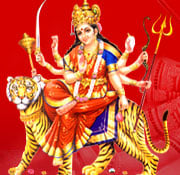
Navratri is a Hindu festival of worship of Shakti and dance & festivities. The word Navaratri literally means nine nights in Sanskrit, nava meaning nine and ratri meaning nights. During these nine nights and ten days, nine forms of Shakti/Devi are worshiped.  
Navratri festival in Gujarat is one of the main festivals. Garba is dance which people use to dance after the Durga Pooja with the groups and live orchestra or devotional songs.
Garba  is an Indian form of dance that originated in the Gujarat region. The name garba comes from the Sanskrit term Garbha ("womb") and Deep("a small earthenware lamp"). Many traditional garbas are performed around a central lit lamp or picture/statues of different avatars of Goddess Shakti. The circular and spiral figures of Garba have similarities to other spiritual dances, such as those of Sufi culture.

Modern garba is also heavily influenced by raas, a dance traditionally performed by men. The merger of these two dances has formed the high-energy dance that is seen today.
Both men and women usually wear colorful costumes while performing garba and dandiya. The girls and the women wear Chaniya choli, a three-piece dress with a choli, a chaniya, as the flared, skirt-like bottom, and dupatta, which is usually worn in the traditional Gujarati manner. Chaniya Cholis are decorated with beads, shells, mirrors, sitaras, and embroidery work, mati, Traditionally, women adorn themselves with jhumkas, necklaces, bindi, bajubandh, chudas and kangans, kamarbandh, payal, and mojiris. Boys and men wear kafni pyjamas with a kediyu - a short round kurta - above the knees and pagadi on the head with bandhini dupatta, kada, and mojiris.
There is a huge interest in Garba amongst the youth of the Indian and in particular Gujarati diaspora. Garba and Dandiya Raas are popular in the United States where more than 20 universities have Raas Garba competitions on a huge scale every year with professional choreography. 
Before the big night.
I enjoy Garba with a burning passion! I look forward to this day every year. This year, I brought along my friend Kaylyn. I was happy to see that she picked up the steps very quickly! I've won the Garba competition the past three years in a row! Although we got home at almost 2:30 am, it was totally worth it. Here are some highlights from the evening.
The Competition! :)

I can't wait till next year!

***Kaylyn took a close-up video of the competition as well. I'll post it as soon as I can!


Leia Mais…

Saturday, September 10, 2011

An Event that Defined Me


In the summer of 2005, my family decided to take a trip to India for the 50th anniversary of my grandparents’ marriage. Because I am of Indian heritage, it was my third of four visits to the country. We visited Rajasthan, “The Land of the Kings”, in western India visiting many forts and palaces of the 18th century.  We also held an enormous anniversary party for my grandparents and spent a great amount of time with many family members from Indiana, Louisiana, and many more, that had come to India just for the occasion. As a young girl in the fifth grade from Pennsylvania, I enjoyed feeding the monkeys and cows and riding in the Indian taxi, known as Rickshaw, several times around the city of Vadodara. I also had a great time when the whole family rented a large bus, which seated about ­­­50 people, and drove up to Mount Abu, is the highest peak in the Aravalli Range of Rajasthan. After three weeks of vacationing my father and brother traveled back to the United States, which my mother and I stayed with some close relatives in Vadodara. Unfortunately, July is monsoon season in India. Due to bad gutters, many areas of the country started to flood, including the city that we were in. My older cousin tried to take his son and I to the movie theater, but the water was so high that we had to turn around and come home. We were stuck in the house for several days because it was too unsafe to go outside. We tried to make the best of our situation, so we put on our raincoats and climbed up several flights of stairs to the roof. We walked outside and the wind would blow our small bodies as we danced in the rain and enjoyed each other’s company. However, as I looked down from over the terrace, I saw several people’s houses destroyed. I noticed that people need to swim across a huge lake of water just to get some milk for their families. Cars and bikes were destroyed, and people had no form of transportation. The next day, my mother and I set off with my aunt and uncle to help some people in tought sitatutions due to the storm. We bought  a generous supply of Parle-G cookie packages and drove to one of the main roads in the city. As I rolled my window down to hand some to some small impoverished children, a huge crowd started to form around the car. I was shocked as people ran over begging for just one cookie. They wailed their arms and started to put them through the open window, desperate for a small amount of food. My mother told me to roll my window up and leave open only a small crack big enough to fit a package. We soon ran out of our supply of food and had to drive away from a crowd of disappointed families without any food or shelter.
Woodrow Wilson once said, "You are not here merely to make a living. You are here in order to enable the world to live more amply, with greater vision, with a finer spirit of hope and achievement. You are here to enrich the world, and to impoverish yourself if you forget the errand." Although this event frightened me as a child, I learned a valuable lesson that changed my life forever. This trip altered my view of society and influenced me to change my habits. It inspired me to start volunteering and help the world and my small community to make a difference. The next year, I joined the Builders Club. We raised many funds for difference associations and causes, such as St. Jude’s Children’s Hospital, and Juvenile Arthritis. I also participated in the Student Council and volunteered and many school events. As I progressed to high school, I became involved in the Key Club, which broadened my service to more areas of the community. As president, I developed tutoring programs for students at my school, helped with Relay For Life, the Walk for Alzheimer’s, and countless other events. I was also nominated to attend the Hugh O’Brian Leadership Conference, where I met kids my age who were interested in service as well. Here, I packed food at the Global Food Network for people starving in many parts of the world. Currently, I teach young children to read write and speak my native language, Gujarati, at a Hindu temple nearby. I love being an active member in my community.  I am proud to say that from May 2010 to May 2011 I performed 177 hours of community service received a presidential letter acknowledging this accomplishment. 

Leia Mais…

Monday, March 28, 2011

Some Pictures from Holi in India

From: dogonews.com


Looks like a fun time right? Sure is!

Leia Mais…

Saturday, March 19, 2011

The Harmonium

So, since it's Holi, I've decided to go on an Indian cultural spree!
Tomorrow, the devotional music class my mother teaches will be performing at the annual Holi program at my temple. The group will be singing an Indian prayer, followed by a song that celebrates the Holi festival. I will be helping them out be playing the harmonium, a Indian instrument. The harmonium is like a one-handed piano - accordion. Sound is produced by air, supplied by hand-operated bellows, being blown through sets of free reeds. 
Though derived from the designs developed in France, the harmonium was developed further in India in unique ways, such as the addition of drone stops and a scale changing mechanism. South Asian music is based on melody, rather than harmony, which makes two-handed playing unnecessary, and South Asian musicians are used to sitting cross-legged on the ground or kneeling to play, rather than on a chair or bench.
This is how it is played and what it sounds like:


Here's a cool video of  T.I., an American recording artist, and film and music producer learning about some Indian instruments, including the harmonium!

Leia Mais…

Happy Holi!

What's in the Indian kitchen today?
"Holi na Ladva!"
My mom has been working on these all day.
This deliciously unhealthy Indian sweet is a tradition to make on Holi day.
Here is the SIMPLIFIED recipe:


 Churma Ladoo Recipe:


Ingredients:
200 gms wheat flour
150 gms sugar
150 gms clarified butter


Preparation:
Mix fat to flour and make a dough as for chapatis. Make even round balls and flatten it to about 2 inches diameter.Heat butter. Fry the balls on a slow fire till it turns golden brown.
Make a fine powder of these balls and sieve.
Heat the butter and fry the powder till it turns light brown.
Remove from fire and allow it to cool.
When the mixture is warm, add ground sugar and mix well and form into ladoos.

Happy eating!

The first day of Spring is tomorrow! Enjoy the sunshine. :)

Leia Mais…

Thursday, March 10, 2011

Holi - The Festival of Colors and Spring


"HOLI HAI!" - It is holi! On Holi day the streets in India will reverberate with the chants of Holi hai...

It's holiday time in my family again. The colorful festival of Holi is celebrated on Phalgun Purnima which comes in February end or early March. This year the festival is on Sunday, March 20. The Holi festival has an ancient origin and celebrates the triumph of 'good' over 'bad'. The colorful festival bridges the social gap and renew sweet relationships.

The Atmosphere:

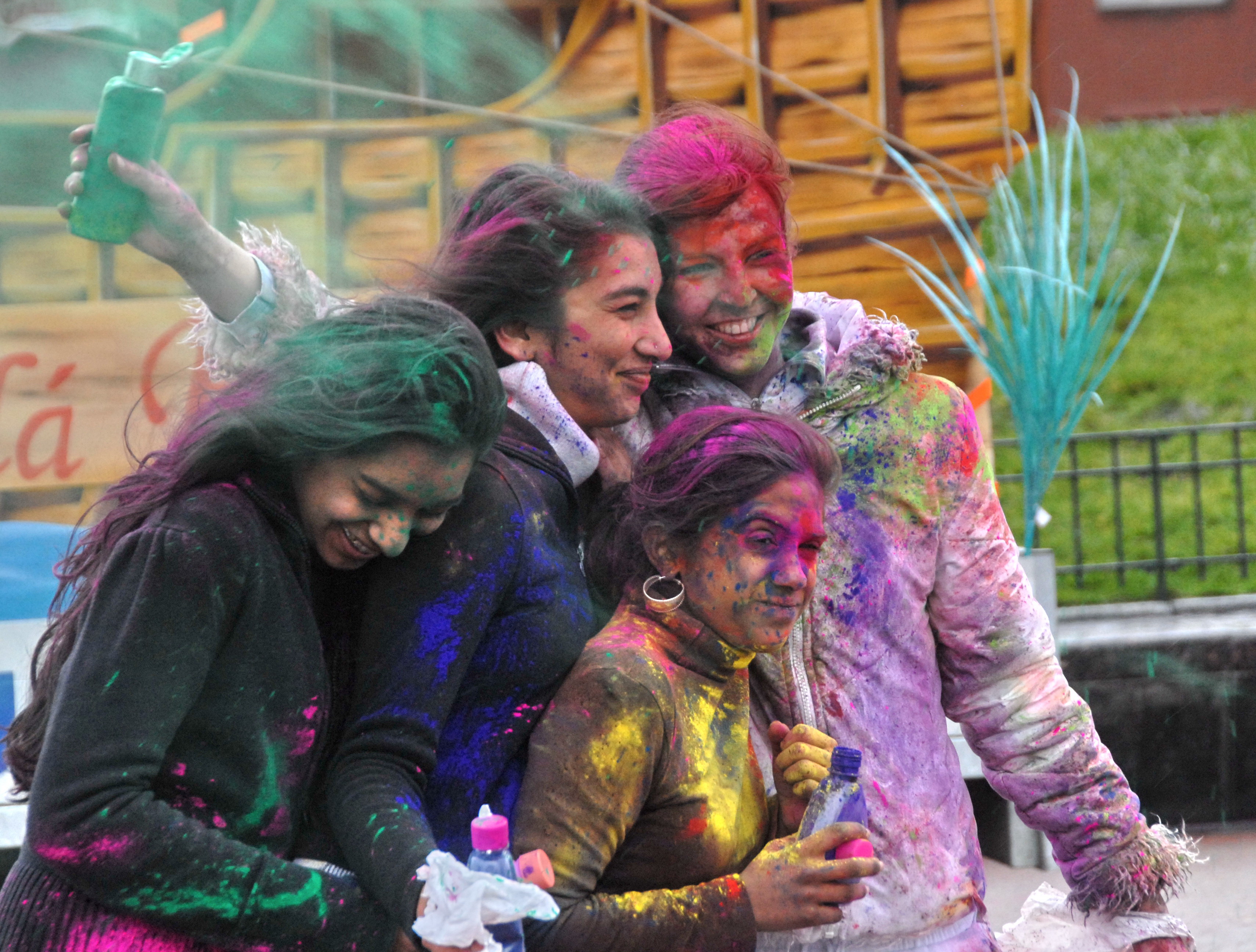
Colours will fill the atmosphere as people throw colorful powders in the air showing great joy and mirth in the arrival of this Spring Festival.
Holi marks the end of the winter gloom and rejoices in the bloom of the spring time. It is the best time and season to celebrate.
Days before Holi, the markets get flooded with the colours of every hues. This aptly sets the mood of the people till the actual day of Holi. It is such a colourful and joyous sight to watch huge piles of bright red, magenta, pink, green and blue every where on the streets.
These days it is easy to buy colours from the market but still some people do take up the task of making colours at home, usually from flowers. These home made colours, have a special fragrance of love in them.


History:

The exact origin of the festival can not be found, though several historians claim that the Holi celebration in the country was brought along with the Aryans. Long ago, Holi was a special rite performed by married women for the happiness, well-being and prosperity of their families and the full moon (Raka) was worshiped for bringing auspiciousness and pleasure.


What does this festival celebrate?

In some parts of India, specially in Bengal and Orissa, Holi Purnima is also celebrated as the birthday of Shri Chaitanya Mahaprabhu (A.D. 1486-1533). However, the literal meaning of the word 'Holi' is 'burning'. There are various legends to explain the meaning of this word, most prominent of all is the legend associated with demon king Hiranyakashyap. 
 
Legend of Lord Krishna is also associated with play with colors as the Lord started the tradition of play with colours by applying colour on his beloved Radha and other gopis. Gradually, the play gained popularity with the people and became a tradition.
There are also a few other legends associated with the festival - like the legend of Shiva and Kaamadeva and those of OgressDhundhi and Pootana. All depict triumph of good over evil - lending a philosophy to the festival.

How is Holi celebrated?
 
The main day of Holi is called Dhuleti. This is the day that the actual play of colors take place. There is no tradition of holding a puja (a common Hindu ritual) and is meant for pure enjoyment. It is common to wear white on Dhuleti. The tradition of playing colors is particularly rampant in India. It may be one of the most excited festivals one can witness. Holi is celebrated with lot of enthusiasm and fun.
People take extreme delight in spraying colour water on each other with pichkaris (water guns) or pouring buckets and buckets of it. Singing Bollywood Holi numbers and dancing on the beat of dholak (drum) is also a part of the tradition.
My temple in Harrisburg will be having a small colors celebration on March 20.


Leia Mais…

Saturday, February 19, 2011

A Tribute to My Country, India

     When one speaks of India, they may think of a country far away, both dirty and cluttered. They may think of the busy streets, the terrible humidity, and an intense monsoon season. However, when I think of India, I think family, love, beauty, and closeness to my culture. I've been to India four times in my lifetime, each a different experience.
     The first time was to attend my uncle's wedding. I was six months old at the time, so I don't remember a thing. However, this trip was very important to me. We have a family photo of my mother's family, including us, her mother, all of her brothers and sisters, and their children. This is the only photo existing in which everyone was together in the same place at the same time. Although I am sleeping on my father's shoulder, and I cannot even see my face, this is probably one of my favorite pictures ever.

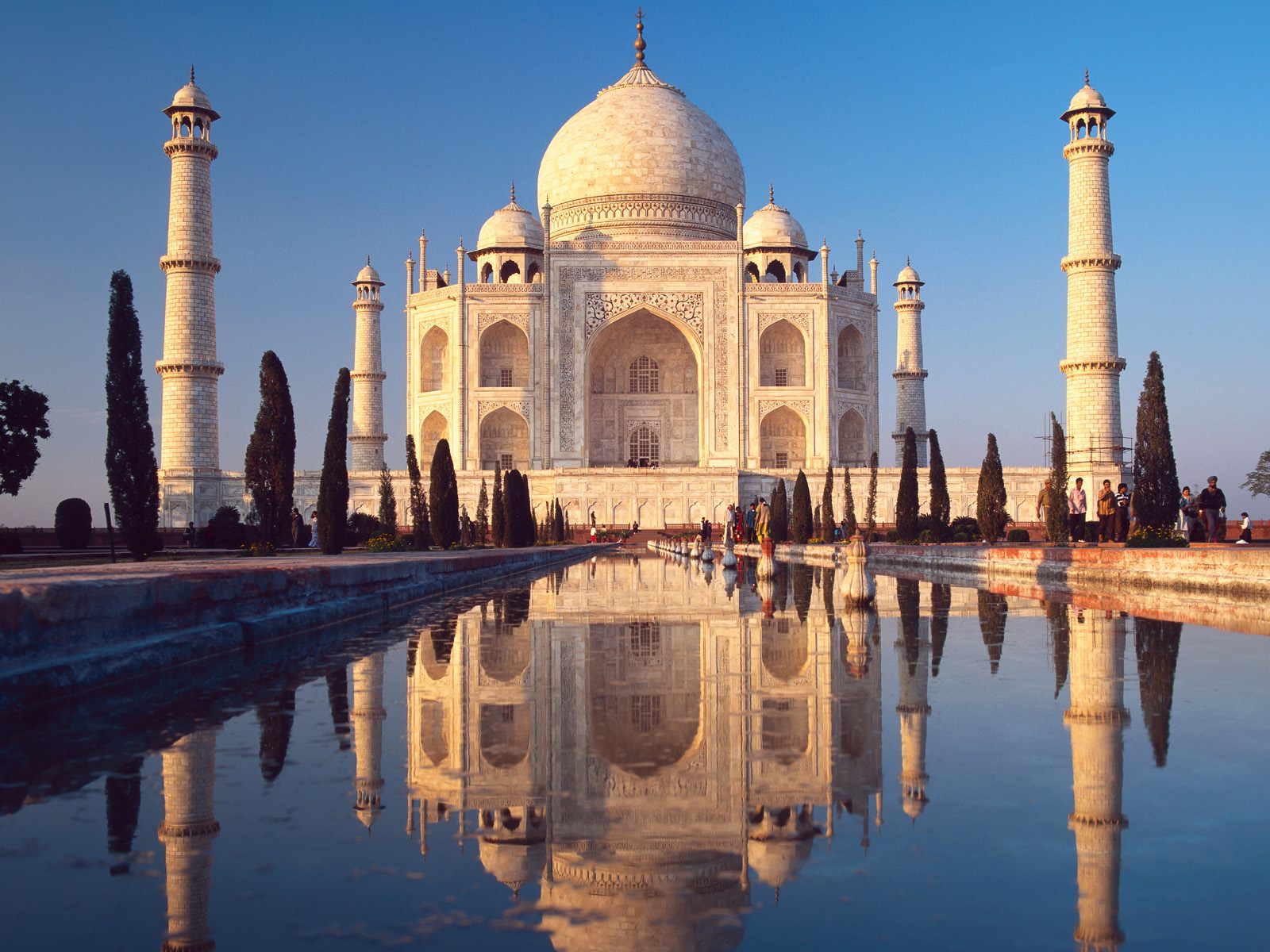
     My next trip to India was in the second grade in 2002. The main aspect I remember about this trip was visiting Agra and Dehli, two great cities in India. One of the seven wonders of the world, the Taj Mahal, is located in Agra, Utter Pradesh. It was built by Mughal emperor Shah Jahan in memory of his third wife, Mumtaz Mahal, is widely considered as one of the most beautiful buildings in the world and stands as a symbol of eternal love. I remember a photographer who made me stand on a bench and stretch my arm out, as if I were touching the tip of the enormous structure. When I looked at the picture, it seemed as if I were taller than the Taj Mahal!
     I went to India again in the fifth grade in 2005  to celebrate my grandparents' (who currently reside in Vadodara, Gujarat) 50th wedding anniversary.We visited the state of Rajasthan in Northwest India. I visited great forts and had the chance to ride an elephant in the city of Jaipur. We also visited Udaipur.
     My most recent trip to India was in the eighth grade in 2008. I remember this trip the most because it was only three years ago. On this trip, my family and I visited the state Kerala in South India. We traveled from rice paddys on the tops of high hills to beautiful crystal clear beaches. My absolute favorite beach was in Kerala. The water was the cleanest I have ever seen and shimmered in the sun. The beach was very quiet and relaxing, and I found myself wanted to sit there forever. I also had the chance to stay on a houseboat overnight. This was an interesting experience. The boat was very small, and we had our own personal chefs on it. Because the journey was long, my family and I ended up playing a lot of Bukharo games.
     I'm not sure when I'll be going next, but hopefully some new adventures are coming my way! I love my Indian culture, and I hope to be connected with it for the rest of my life.


Leia Mais…

Wednesday, November 3, 2010

Happy New Year!

Okay, so you're probably thinking "Happy New Year? In November?"

It is true! Well, in India it is.
It's Diwali time, or as you may know it, New Year's day, or week. Diwali is India's festival of lights and most important festival of the year. Diwali starts today and Indian families all over the world will be celebrating for the next five days. Here's the rundown of each day:

Day 1: Dhanteras
A diya, or candle, is lit to celebrate the
Fesitval of Lights.
The first day of festival begins with Dhanteras, Dhan means "wealth" and Trayodashi means "13th day". Dhanteras falls on the 13th day of the second half of the lunar month. On this day, homes are thoroughly cleaned, people exchange gifts, and purchase new items for the house. This year you can surprise your close ones by sending them Dhanteras gifts. People pray for prosperity on Dhanteras to Lakshmi, because it is believed to give the best results for the year ahead.

 Day 2: Narak Chaturdasi
The second day of Diwali is called Narak Chaturdasi. Narak means "of new era of Light and Knowledge". Chaturdasi implies the 14th day. Narak Chaturdasi is the 14th day of the dark forth night of the month of Ashwin. On this day Lord Krishna destroyed the demon Narakasur and made the world free from fear.

Day 3: Laxmi Puja on Diwali
An Indian women creates a rangoli masterpiece using
powders of different vibrant colors.
The third day is the main day of  celebrations of the festival of Diwali. "Diyas", or candles, are lit and shine brightly in every home. Lakshmi Puja on Diwali is performed on the day as Laskshmi is the goddess of wealth and Ganesha is the Lord of Happiness. Lakshmi Puja is performed for prosperity, material abundance, and spiritual prosperity. The Puja is performed in the evening. On the third day fireworks are let off everywhere. The diyas and fireworks give Diwali the name of "Festival of the Lights". People also decorate their homes with "rangoli", which is Hindu folk art.

Day 4: Goverdhan Puja/New Year:
The fourth day of Diwali is called Goverdhan Puja, also known as Annakut. In ancient times, the people of Gokul would celebrate a festival in honor of Lord Indra, worshiping him at the end of each monsoon season. However, in one particular year, the young Krishna halted the custom of offering prayers to Indra, who in a fit of anger poured down a deluge in order to destroy Gokul. Krishna saved Gokul by lifting up the mountain called Govardhan and holding it over the people as an umbrella. So, on this day, Goverdhan Puja is performed to commemorate this act of Sri Krishna.


Lord Krishna lifts Govardhan with his finger to
protect the Gokul from the storm
Day 5: Bhai Dooj:
The fifth day of Diwali is Bhai Dooj; it is the second day of the bright fortnight of Kartika. In the Vedic era, Yamraj, the Lord of Death visited his sister Yamuna, who marked the auspicious Tilak on his forehead. They are and talked together, enjoying each other's company, exchanging special gifts as a token of their love for each other. Since that time the custom has been for brothers to visit their sisters to celebrate Bhai Dooj.

More on Hindu Religion during Diwali:
Lord Ganesha

Goddess Lakshmi
The rituals vary according to region. However, special blessings are given to Lakshmi, the Goddess of wealth and prosperity, and Ganesha, the remover of obstacles. The Goddess Lakshmi is believed to have been created from the churning of the ocean on the main Diwali day, and that she'll visit every home during the Diwali period, bring with her prosperity and good fortune. It's said that she visits the cleanest houses first, therefore people make sure their houses are spotless before lighting diyas invite her in. Small statues of the Goddess are also worshiped in people's homes.


Happy Diwali Everyone! I hope you have a wonderful new year!
:)

Leia Mais…